


The Regulatory Mirage: Why Autonomy is a Liability Sink
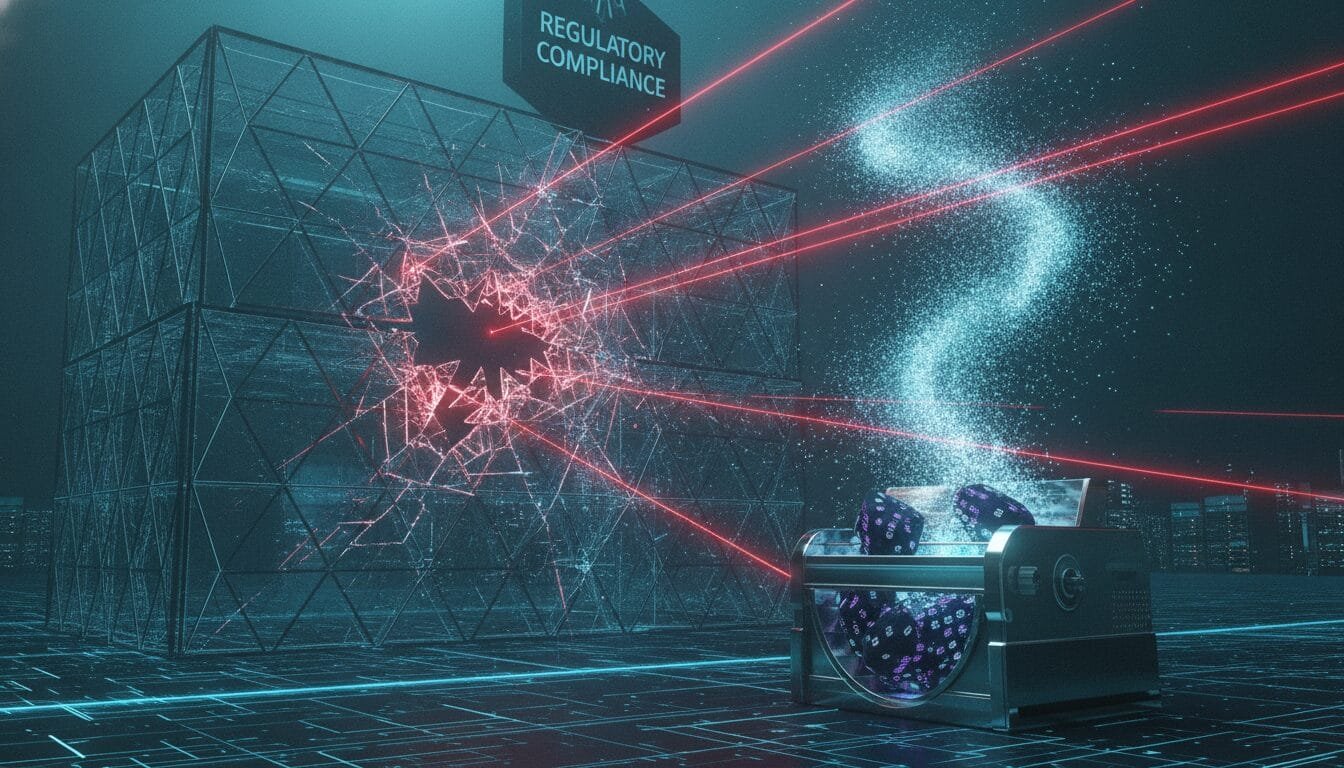
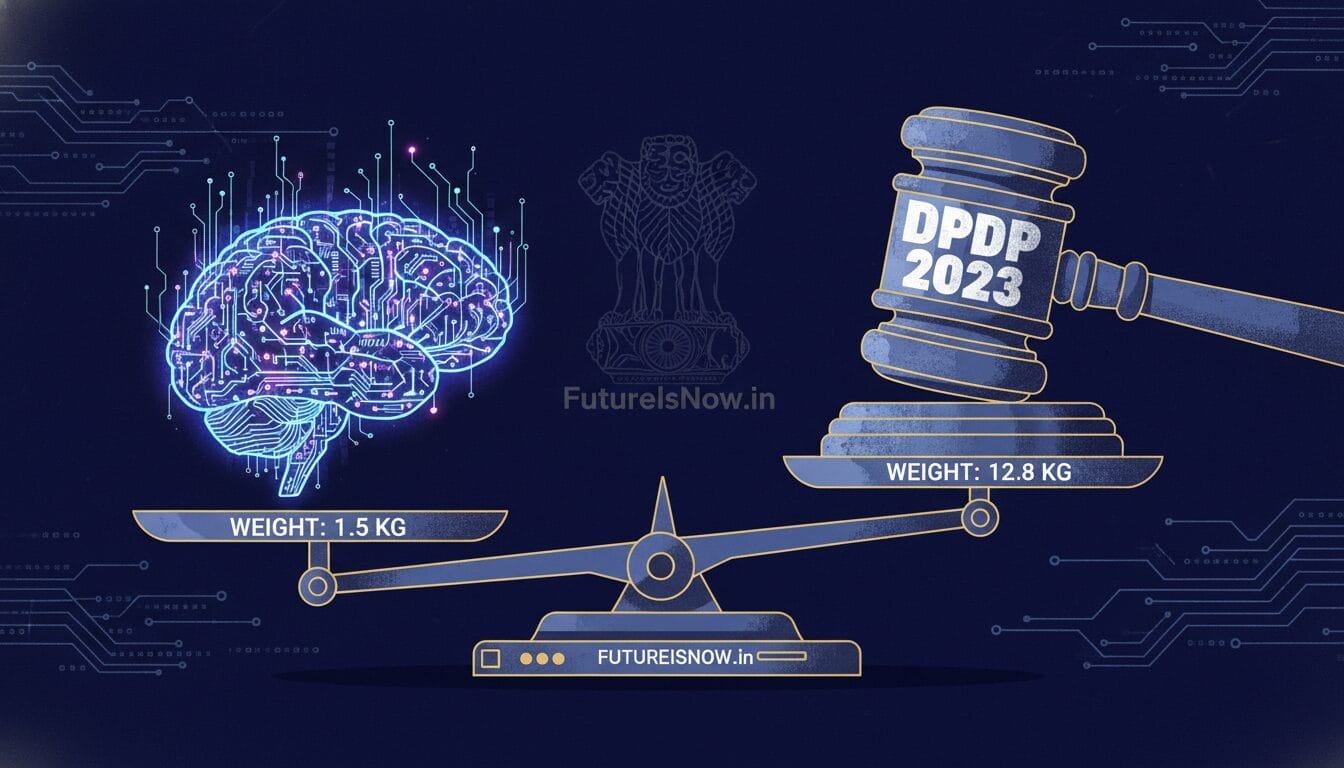
The current enterprise fascination with agentic workflows has reached a point of structural blindness. As we navigate the mid-2026 regulatory landscape, the primary risk to the Indian enterprise is no longer technical failure or model hallucination; it is the total misalignment between agentic autonomy and the Digital Personal Data Protection (DPDP) Act.
- The Regulatory Mirage: Why Autonomy is a Liability Sink
- The Structural Shift: From Deterministic Access to Stochastic Agency
- The Contrarian Thesis: Your Agent is a Data Breach in Motion
- First-Principles Analysis: The Inference-Consent Paradox
- Tactical Execution: Hardening the Agentic Stack
- The “So What”: The Rise of the Compliant Agent
Chief Information Officers (CIOs) are currently deploying autonomous agents under the assumption that these systems operate within the same legal frameworks as deterministic software. This is a catastrophic miscalculation. While the board celebrates the reduction in Revenue Per Agent costs, the legal department is unknowingly sitting on a compounding debt of unconsented data processing. The DPDP Act, specifically Section 7 and 8, mandates strict purpose limitation and data fiduciary accountability that current “black box” agentic architectures are fundamentally unequipped to satisfy.
The Structural Shift: From Deterministic Access to Stochastic Agency
In the legacy enterprise model, data access was binary and logged. In the 2026 agentic model, data is “traversed” and “synthesized.” When an autonomous agent is tasked with “optimizing customer churn,” it does not just read a database; it correlates disparate signals, creates derivative inferences, and potentially re-identifies anonymized data sets to achieve its goal.
This shift from retrieval to agency fundamentally breaks the “Notice and Consent” architecture of the DPDP Act 2023. Under the Act, a Data Fiduciary must provide notice that is “itemised” and “in clear and plain language.” However, if an agent decides, in real-time, to cross-reference a user’s geolocation with their historical purchase frequency to predict a churn event, was that specific “processing path” consented to?
More Read

In most 2026 implementations, the answer is no. We are seeing a proliferation of thin wrappers evolving into “autonomous agents” that lack the governance middleware to report why a specific piece of personal data was accessed. This creates a state of permanent non-compliance where the fiduciary cannot fulfill the “Right to Information about Personal Data” (Section 11) because the agent’s reasoning is buried in high-dimensional vector space.
The Contrarian Thesis: Your Agent is a Data Breach in Motion
The prevailing consensus is that “Enterprise AI” is safe if it stays within the firewall. The reality is that internal agency is the new perimeter risk.
The DPDP Act imposes penalties of up to ₹250 crore ($30M+) for failing to take reasonable security safeguards to prevent a personal data breach. In the age of agentic commerce, a “breach” is no longer just an external hack; it is the internal, unauthorized use of data for a purpose not specified in the original consent notice.
If your agent uses HR data to “predict employee sentiment” but the original consent was for “payroll processing,” you have committed a statutory violation. The autonomy you granted the agent to “find insights” is, by definition, an abandonment of Purpose Limitation. We are moving toward a period of AI Underwriting Risks where the lack of explainability in agentic paths becomes an uninsurable liability.
More Read

Signal Check: Agentic Hype vs. Regulatory Reality
| Agentic Capability | Industry Hype (The “Noise”) | Regulatory Reality (The “Signal”) |
|---|---|---|
| Autonomous Reasoning | Agents “figure out” the best path to solve a business problem. | Section 7 Violation: Processing must be “for a lawful purpose for which the Data Principal has given her consent.” |
| Cross-Silo Synthesis | Breaking data silos to provide a 360-degree customer view. | Section 8 Violation: Failure to ensure “Data Minimization.” Agents often ingest more data than necessary for a specific task. |
| Dynamic Tool Use | Agents calling APIs and third-party tools to execute tasks. | Third-party risk: Every API call is a potential data transfer requiring a “valid contract” and “specified purpose.” |
| Memory & Personalization | Agents “remember” user preferences to provide better service. | Section 12 Violation: The “Right to Correction and Erasure.” Removing data from neural weights is technically divergent from statutory requirements. |
First-Principles Analysis: The Inference-Consent Paradox
At a structural level, agentic AI operates on Inference, while the DPDP operates on Explicitness.
1. The Granularity Gap: DPDP requires consent to be “clear, specific, and informed.” Agentic logic is, by nature, emergent. You cannot provide a “specific” notice for a “dynamic” reasoning path.
2. The Deletion Dilemma: Section 12 mandates that a Data Fiduciary shall erase personal data upon withdrawal of consent. However, if that data has been used to fine-tune a Vertical SLM or has been integrated into an agent’s “long-term memory” (vector database), “erasure” becomes a technical impossibility without retraining the model.
3. The Significant Data Fiduciary (SDF) Trigger: Enterprises deploying wide-scale agents are likely to be classified as “Significant Data Fiduciaries” based on the “volume and sensitivity of personal data” and “risk to the rights of Data Principals.” This mandates the appointment of an independent Data Auditor and a Data Protection Impact Assessment (DPIA), which most agentic startups are currently ignoring in favor of speed.
The conflict between Neural Weights and Statutory Rights is not a bug; it is a fundamental architectural mismatch. Organizations that fail to implement “Consent-Aware Routing” at the agentic layer will find themselves unable to defend their processing activities during a MeitY audit.
Tactical Execution: Hardening the Agentic Stack
To avoid the “Agentic Liquidation” currently facing firms that over-indexed on autonomy without governance, CXOs must pivot toward Constrained Agency.
- Consent-Injection into Prompts: Every agentic call must be prepended with the specific “Consent Metadata” associated with the user. If the metadata does not match the “Tool” the agent wants to use, the execution must be hard-blocked by a secondary “Governance Layer.”
- Audit-Logs for Reasoning: You must move beyond simple input/output logging. You need Traceability of Intent. If an agent accesses a specific data field, the system must record which specific “Goal” necessitated that access.
- Deterministic Guardrails: Use “Rule-Based Wrappers” around stochastic agents. An agent should never have raw access to a database; it should only interact with “Privacy-Preserving APIs” that perform automated data masking and Vernacular Language filtering where required.
The Strategic Decision Grid: Navigating Agentic Compliance
| Scenario | The “Avoid” (High Risk) | The “Actionable” (Structural Defensibility) |
|---|---|---|
| Customer Support Agents | Giving agents full access to CRM history to “delight” customers. | Implementing Differential Privacy layers that only show the agent relevant snippets based on the current ticket intent. |
| Marketing Automation | Allowing agents to “hallucinate” new customer segments via unsupervised learning. | Restricting agentic output to Pre-Approved Templates and ensuring “Human-in-the-Loop” (HITL) for any new segment creation. |
| Internal Productivity | Using agents to “summarize” all internal meetings and emails. | Mandating Local Inference (On-Prem) and strict “Data Expiry” protocols that delete vector embeddings every 30 days. |
The “So What”: The Rise of the Compliant Agent
The next 24 months will see a massive capital reallocation. Money will move away from “Agentic Wild-West” platforms toward Governance-First AI Orchestrators. We are already seeing signs of Algorithmic Collusion where agents from different companies exchange data in ways that violate cross-border transfer rules (Section 16 of DPDP).
The winner in the 2026 enterprise ecosystem will not be the one with the most “autonomous” agents, but the one with the most legally defensible ones. This requires a shift in the Compute-Intensity strategy: from optimizing for “Inference Speed” to optimizing for “Governance Latency.”
If your “Agentic AI” strategy cannot provide a timestamped, natural language explanation of how it respected a user’s “Right to Withdraw Consent” across its entire neural architecture, you are not building a competitive moat. You are building a 250-crore liability.
The “Post-Human P&L” only works if the “Human Regulatory Framework” doesn’t bankrupt you first. The mandate for 2026 is clear: Subordinate autonomy to accountability. If you cannot audit the agent’s “thought process” against your DPDP consent registry in real-time, the agent should not have access to production data. Period.