


The Great Bangalore Inversion
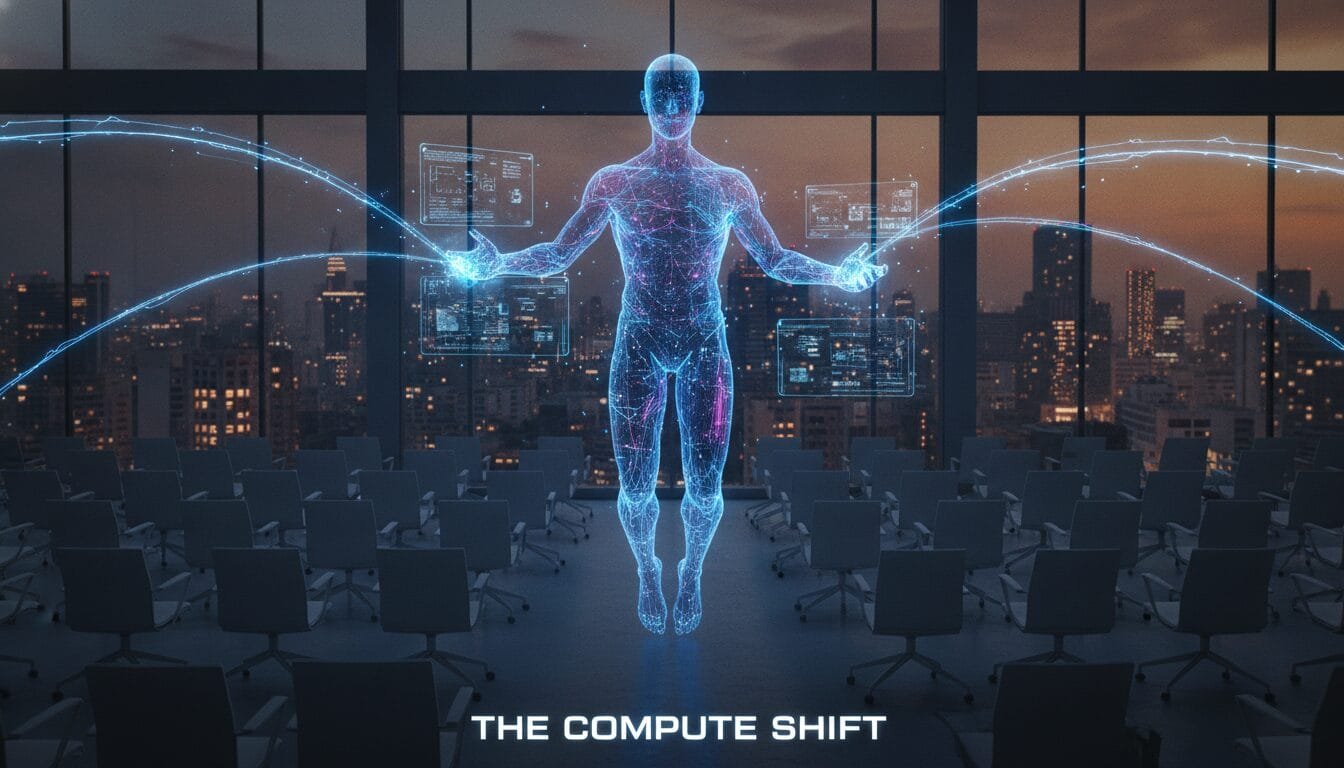
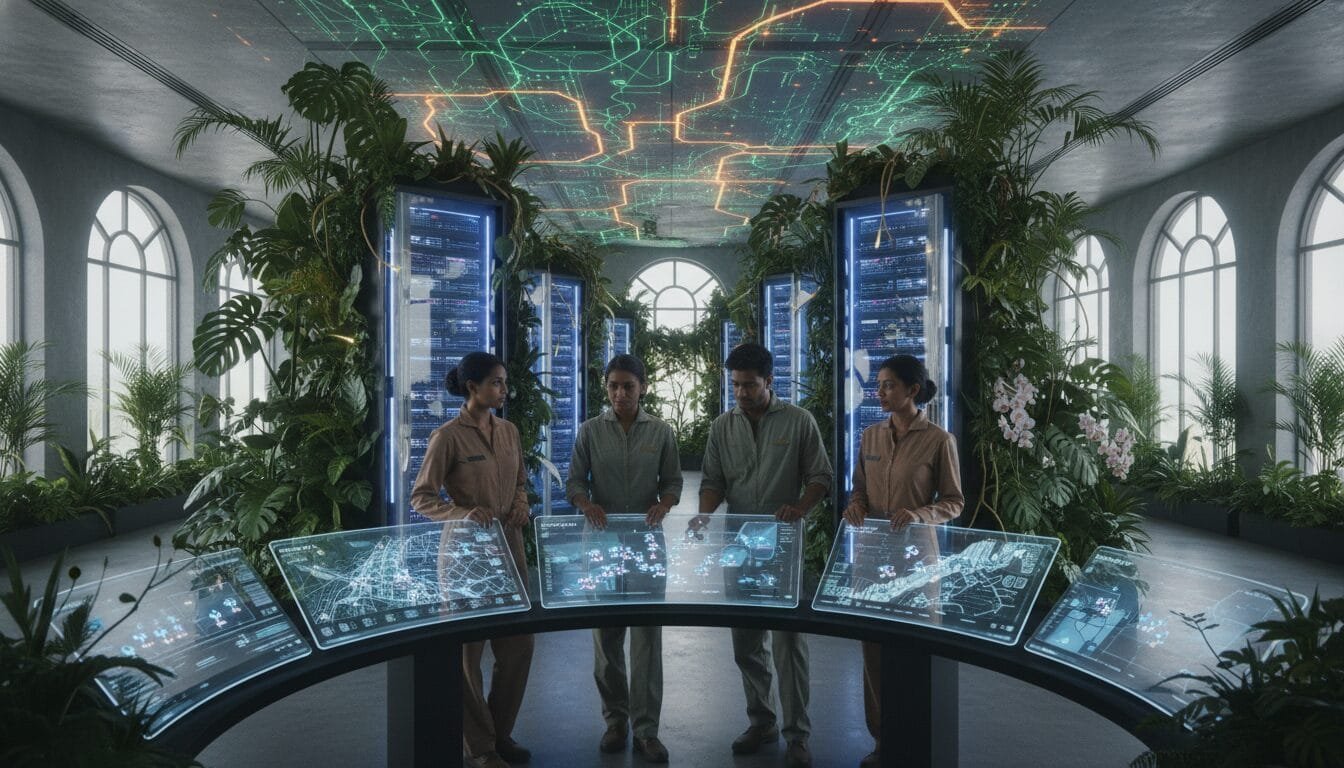
By Q2 2026, the structural logic of the Bangalore Global Capability Center (GCC) is undergoing a sweeping revaluation. The historic model, predicated entirely on labor arbitrage—a pyramidal structure where localized Western leadership oversaw a massive, low-cost transactional base—is rapidly giving way to a system defined by autonomous execution. Today, Bangalore functions less as a remote delivery center and more as a Cognitive Command Center, where sophisticated agentic layers execute high-order strategic functions.
- The Great Bangalore Inversion
- Strategic Analogy: From the “Remote Hard Drive” to the “Autonomous Processor”
- The Structural Shift: Architecting the Agentic Stack
- Signal vs. Noise: The 2026 Reality Check
- The Contrarian Thesis: The Middle Management “Hollow-Out”
- First-Principles Analysis: Reverse Knowledge Transfer
- Implementation Playbook: Role-Based Takeaways
The primary unit of value has shifted from cost-per-head to cognitive yield. Advanced organizations no longer measure operational success by billable hours, but rather by model accuracy and inference-to-insight velocity. Supported by a remarkably deep talent pool of 2.35 million AI-fluent professionals, the modern Bangalore GCC stands as a formidable competitor to traditional IT service integrators. By actively leveraging IndiaAI Mission resources, these centers are building proprietary intelligence moats that increasingly bypass third-party outsourcing altogether.
Strategic Analogy: From the “Remote Hard Drive” to the “Autonomous Processor”
To understand this transition from a cost-containment hub to an innovation engine, one must look at the evolution of enterprise computing. The first-generation GCC functioned much like a Remote Hard Drive: an off-site location to store data and execute pre-defined workflows. This model was characterized by high latency and linear scaling; if a firm’s workload doubled, the operational response was simply to add more human headcount.
The 2026 AI-first GCC, conversely, operates as an Autonomous Processor. It does not merely store information or follow static instructions; it computes complex business outcomes. In this architecture, the Bangalore hub acts as a distributed neural network. An automated agentic layer processes the vast majority of transactional volume, allowing human experts to pivot toward roles as “Model Governors,” tasked with refining and optimizing the system’s predictive accuracy. This decoupling of enterprise value from human hours reflects a shift toward capital gravity, where the organization capable of generating the highest intelligence yield per dollar invested dominates the market.
More Read

The Structural Shift: Architecting the Agentic Stack
Transitioning to an AI-first operating model requires profound architectural re-engineering rather than superficial generative AI wrappers. Advanced Bangalore GCCs are deliberately bifurcating their technical stacks to resolve two distinct operational requirements:
- The Brain (LangGraph): Designed for complex, cyclical, and state-heavy reasoning. Financial GCCs in Bangalore deploy LangGraph architectures to manage “long-chain reasoning” across multi-jurisdictional compliance and audit workflows, ensuring that logical state and regulatory context are preserved across weeks of continuous processing.
- The Muscle (CrewAI): Engineered for high-velocity, role-based parallel execution. This framework powers recent breakthroughs in global procurement, where automated agent swarms negotiate simultaneously with thousands of suppliers—an administrative feat that previously required vast hierarchies of procurement managers.
This dual-stack architecture demands a robust Unified Data Fabric. The severe agent planning costs bottleneck of early 2025 forced the industry to mature: agents operating without a high-fidelity data environment inevitably generate hallucinatory execution. Consequently, successful GCCs have pivoted away from stagnant data lakes toward dynamic Vector Database Orchestration, guaranteeing that autonomous agents maintain real-time access to the enterprise’s verified collective memory.
Signal vs. Noise: The 2026 Reality Check
| Feature | Market Noise (The Hype) | Signal (The 2026 Reality) |
|---|---|---|
| Success Metric | Continuous headcount expansion in Bangalore. | Headcount-to-Innovation ROI Index. |
| Agent Role | “Co-pilots” assisting human operators. | Autonomous agents independently managing vendor flows. |
| Middle Management | Managers elevated to lead larger, tech-enabled teams. | Structural disintermediation of the middle-management tier. |
| Data Strategy | Accumulation of massive, centralized Data Lakes. | Unified Data Fabric and edge NPU integration. |
| Security | Traditional perimeter cybersecurity models. | OWASP ASI01: Advanced frameworks countering agent goal hijacking. |
The Contrarian Thesis: The Middle Management “Hollow-Out”
While mainstream industry narratives consistently celebrate the rapid upskilling of entry-level engineering talent, empirical data from 2026 reveals a structural hollowing-out of middle management. Agentic AI aggressively flattens GCC hierarchies by disintermediating the “Human Router”—the mid-level coordinator whose primary organizational function was to ferry information between the executive suite and the execution layer.
As autonomous agents assume responsibility for planning and cross-departmental coordination, managers who fail to transition into Model Governance—auditing agentic logic, mitigating bias, and ensuring ethical alignment—face systemic obsolescence. Consequently, corporate real estate portfolios are recalibrating. Sprawling mega-campuses are steadily losing ground to hyper-specialized innovation pods that prioritize localized physical-AI laboratories and robust GPU-as-a-Service (GaaS) infrastructure over conventional desk space.

First-Principles Analysis: Reverse Knowledge Transfer
Arguably the most profound shift in the Bangalore GCC ecosystem is the normalization of Reverse Knowledge Transfer (RKT). Historically, intellectual property and operational mandates flowed outward from the Western headquarters to the Indian periphery. Under an agentic model, this polarity has reversed.
Because Bangalore hubs are primarily responsible for architecting complex autonomous workflows and managing sensitive sovereign AI infrastructure, these centers now effectively dictate the enterprise’s global technological roadmap. The operative question in Bangalore is no longer “How can we execute this process more cheaply?” but rather, “How must the global headquarters adapt to the autonomous frameworks we have engineered?” This inversion illustrates the true maturation of the GCC into a core innovation engine.
Implementation Playbook: Role-Based Takeaways
- For the CIO: Prioritize LLMOps Lifecycle Management and immediately formalize a “Shadow AI” Governance Framework. Your primary objective must be the eradication of data silos that precipitate agentic hallucinations. Strategically leverage Karnataka State AI policy incentives to offset the capital expenditure of localized GPU procurement.
- For the CFO: Transition accounting metrics from cost-center containment to value-based capability billing. Rigorously track the Headcount-to-Innovation ROI Index. If your Bangalore leadership is still measuring growth by physical seat counts, the organization is already trailing the agentic ROI curve.
- For Founders and Builders: Focus capital and strategy on Reverse-Architecting. Avoid building marginal efficiency tools for the global headquarters; instead, construct the intelligence moat that renders the global HQ fundamentally reliant on your Bangalore-engineered agents. Target the localized Silicon Forest talent ecosystem to secure specialized engineering talent, bypassing the saturated traditional IT services talent pools.