


Executive Summary: The 2-Gigawatt Ceiling and the Physical Limits of Compute
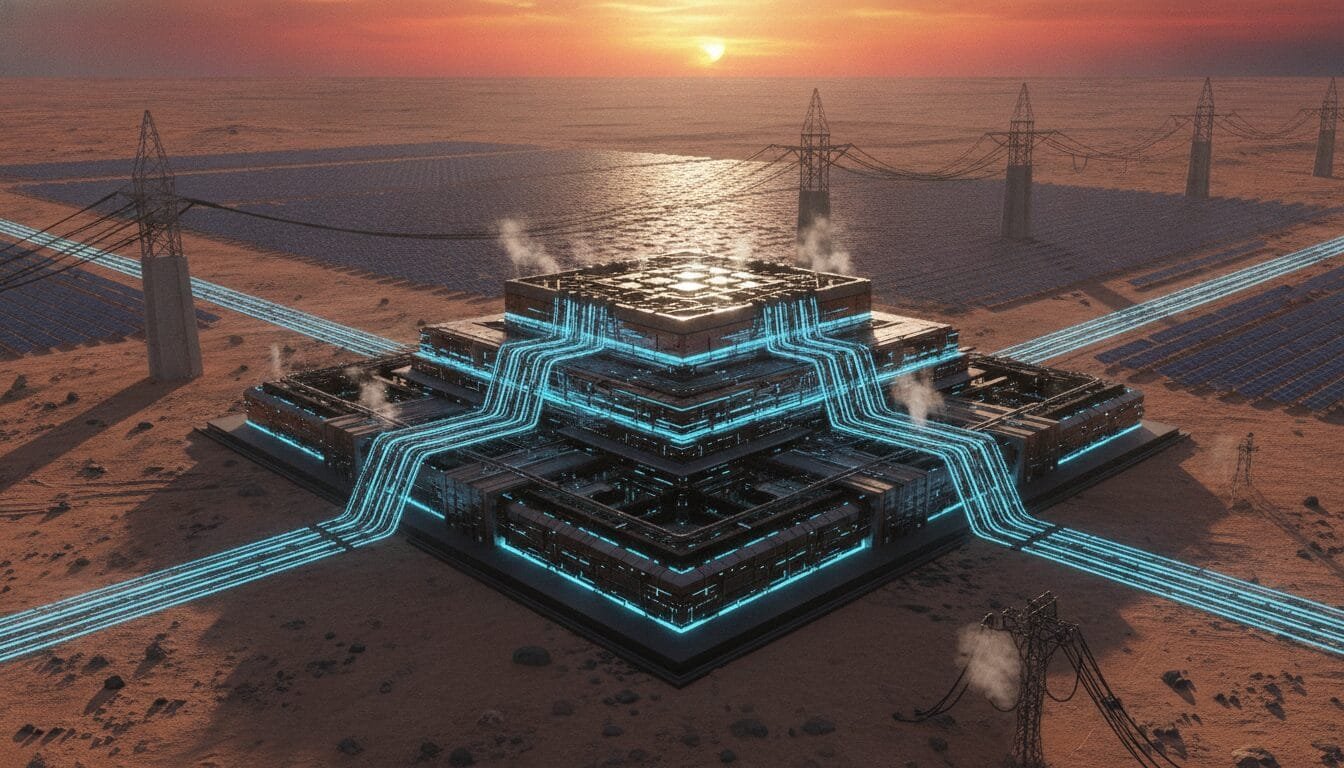
The AI industry has reached a paradoxical milestone: capital and silicon are abundant enough to architect 5-gigawatt (GW) clusters, yet the physical infrastructure to power them remains fundamentally constrained. This structural barrier—the 2-Gigawatt Ceiling—represents the maximum capacity of a standard 500kV substation node before necessitating a total regional grid overhaul.
- Executive Summary: The 2-Gigawatt Ceiling and the Physical Limits of Compute
- The Structural Shift: From Chip Scarcity to Interconnection Inertia
- Strategic Divergence: Shadow Grids and Stranded Assets
- First-Principles Analysis: Thermal Density and Grid Mechanics
- Institutional Arbitrage: Defense Pacts and Sovereign Priority
- The Implementation Playbook: Architecting for the 5-Gigawatt Threshold
For builders and strategists mapping their operations, the core bottleneck has transitioned from software architecture to heavy engineering and sovereign permitting. With interconnection queues in primary markets like Northern Virginia (PJM) stretching to 5.2 years, reliance on civilian grid timelines has become a capital-inefficient liability. The market is shifting decisively toward Behind-the-Meter (BTM) generation, where an AI enterprise’s valuation correlates directly with its energy independence. Operators assuming grid parity in their expansion models risk accumulating billions in stranded compute—advanced GPUs effectively rendered inert because high-voltage transformer procurement delays outlast the depreciation cycles of the hardware itself.
The Structural Shift: From Chip Scarcity to Interconnection Inertia
Supply chain anxieties have migrated from the foundry to the substation. While previous cycles were defined by hardware scarcity, current scaling is paralyzed by Interconnection Inertia. The global under-construction pipeline for data centers has contracted marginally from 6.35 GW to 5.99 GW—driven not by softening demand, but by the physical saturation of the “Last Mile” in high-voltage transmission.
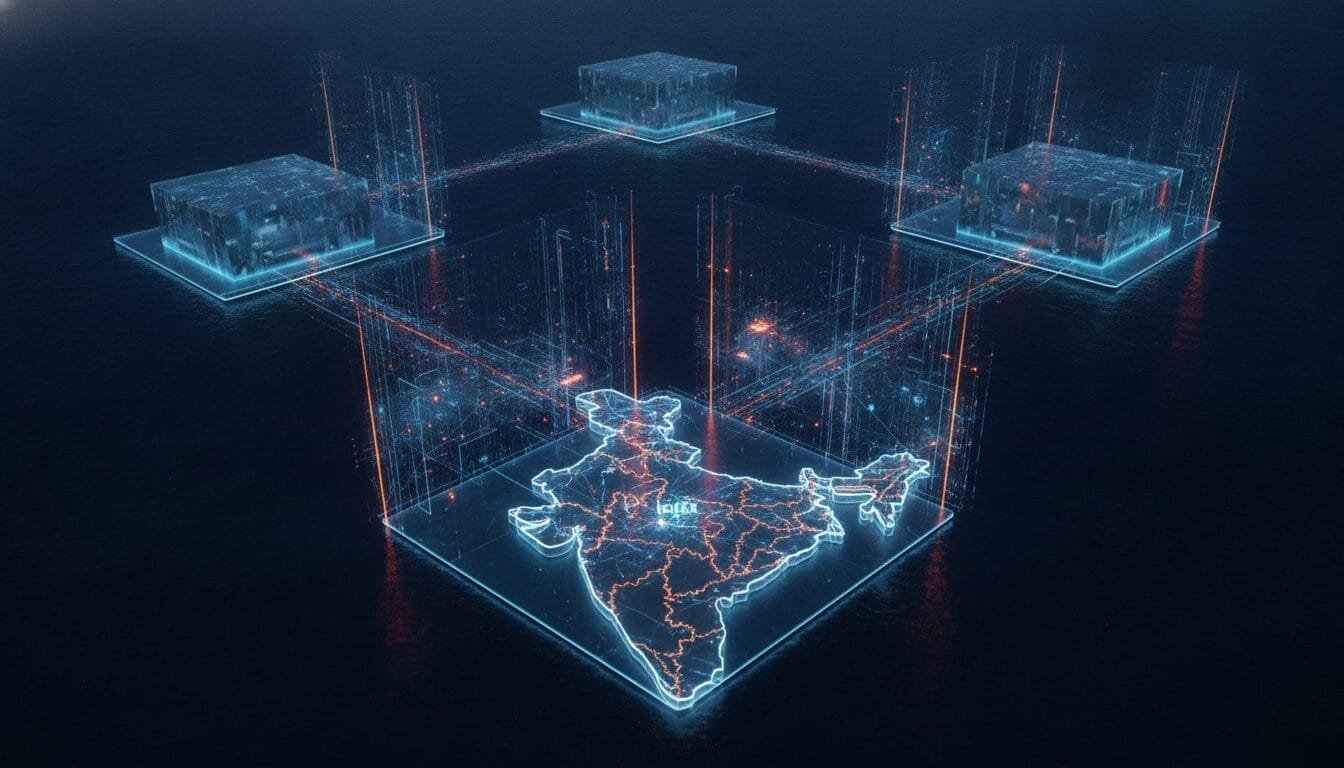
A 2 GW cluster draws power equivalent to a major metropolitan area like Philadelphia. In rapidly scaling markets, sovereign initiatives like the IndiaAI Mission amplify this systemic grid pressure. Local distribution networks in technology hubs such as Pune and Hyderabad face zero-sum allocations between legacy industrial manufacturing and new AI inference loads. This dynamic precipitates a severe monetization schism; only firms possessing the capital and geopolitical leverage to secure priority power lanes can defend their Return on Invested Incremental Capital (ROIIC).
| Metric | 2024 Baseline | 2026 Realized | 2027 Projection |
|---|---|---|---|
| Avg. Cluster Size (Frontier) | 350 MW | 1.2 GW | 2.5 GW+ |
| Transformer Lead Times | 52 Weeks | 110 Weeks | 140 Weeks+ |
| Grid Connection Queue (US) | 3.1 Years | 5.2 Years | 6.5 Years |
| Power Cost (% of OpEx) | 22% | 44% | 58% |
Strategic Divergence: Shadow Grids and Stranded Assets
The consensus view holds that utility companies will gradually expand capacity through traditional rate-base increases. This overlooks a fundamental temporal mismatch: the regulatory lag of Public Utility Commissions (PUCs) cannot accommodate the 18-month refresh cycles of Blackwell- and GB300-class silicon.
The strategic advantage belongs to entities bypassing public utilities to construct a Shadow Grid. This shift manifests in a pronounced pivot from B2B software toward defense-grade infrastructure. Deployments by agile hyperscalers—securing 422 MW in mere months by utilizing dozens of mobile natural gas turbines rather than waiting on regional authorities—illustrate the new operational baseline.
Conversely, the immediate systemic risk is Stranded Asset Syndrome. Capital expenditure data from Tracxn reveals billions flowing into “AI-Ready” physical shells devoid of “Power-Ready” interconnection agreements. These facilities face severe impairment risks, threatening to spawn a secondary market for distressed compute where state-of-the-art GPUs trade at steep discounts simply for lacking reliable power provisioning.
First-Principles Analysis: Thermal Density and Grid Mechanics
Breaking the 2 GW threshold forces a collision with the absolute limits of traditional data center engineering across three physical fronts:
More Read

- Thermal Management Density: At hyperscale thresholds, air cooling ceases to be viable. Transitioning to liquid cooling—mandatory for 1,200W+ TDP silicon—introduces a 10% parasitic power load strictly for fluid dynamics and pump operations. This aggressively compresses the usable “compute headroom” within a fixed megawatt permit.
- Voltage Stability (The “Inference Twitch”): Unlike the steady-state load profile of model training, real-time inference is volatile. A massive, fluctuating rigid load can induce frequency instability across local 115kV transmission corridors. Regulators are consequently enforcing Large Load Tariffs, transferring the capital burden of broader grid stabilization directly onto AI operators.
- The Spatial Mismatch: Constructing a hyperscale facility requires roughly 18 months. Commissioning a new high-voltage substation demands up to four years, and routing trans-state High-Voltage Direct Current (HVDC) lines can span a decade. The calculus of AI scaling currently runs a severe deficit against the physics of copper and steel.
This physical reality dictates a fundamental decoupling of headcount from growth. The marginal utility of a power systems engineer architecting microgrid-isolated facilities now vastly exceeds that of an additional algorithmic researcher.
Institutional Arbitrage: Defense Pacts and Sovereign Priority
To circumvent civilian gridlock, sovereign entities and defense departments are establishing alternative power corridors. Through Enhanced Use Leases (EUL) at military installations, private hyperscalers secure land and power access in exchange for granting host governments “Defense Priority” on compute cycles.
These installations serve as testing grounds for advanced baseload solutions, including the deployment of small modular reactors (SMRs) and micro-nuclear architectures. Operating within defense-priority lanes allows these clusters to bypass civilian interconnection queues entirely. This institutional arbitrage renders sovereign partnerships the most viable pathway to 5 GW deployments. International industrial policy reflects this same calculus; frameworks like the $64 Billion Packaging Doctrine now embed power-resiliency mandates directly into the conditions for receiving state semiconductor and infrastructure subsidies.
The Implementation Playbook: Architecting for the 5-Gigawatt Threshold
For entities navigating the current expansion cycle, traditional software scaling strategies must be superseded by comprehensive energy strategies.
1. Verticalize the Energy Stack: Operating without long-term Power Purchase Agreements (PPAs) anchored by Behind-the-Meter generation (natural gas, geothermal, or SMRs) equates to running an unhedged compute liability. Hyperscalers must effectively operate as captive utilities.
2. Architect for Asymmetric Loads: Geographic arbitrage is essential. Route non-critical training workloads to regions experiencing high renewable curtailment, operating as an interruptible load to secure preferential rates. Reserve strictly regulated 2 GW permits exclusively for latency-sensitive inference operations.
3. Hedge Against Regulatory Friction: Anticipate the imposition of strict liability frameworks regarding grid impacts. Forthcoming legislation, notably the MeitY AI Bill 2025, signals a legal shift where operators will bear direct responsibility for localized blackouts precipitated by sudden AI load spikes.
4. Substation-First Site Selection: Land acquisition is secondary to securing capacity at the busbar. Viability is dictated by proximity to existing 500kV infrastructure; acreage located further than five miles from a high-voltage backbone constitutes a stranded liability.
The 2-Gigawatt Ceiling functions as an uncompromising market filter, separating narrative-driven entrants from infrastructure-hardened incumbents. Moving forward, the industry’s most potent entities will not be defined by parameter counts, but by their monopolization of secure, off-grid power generation.