

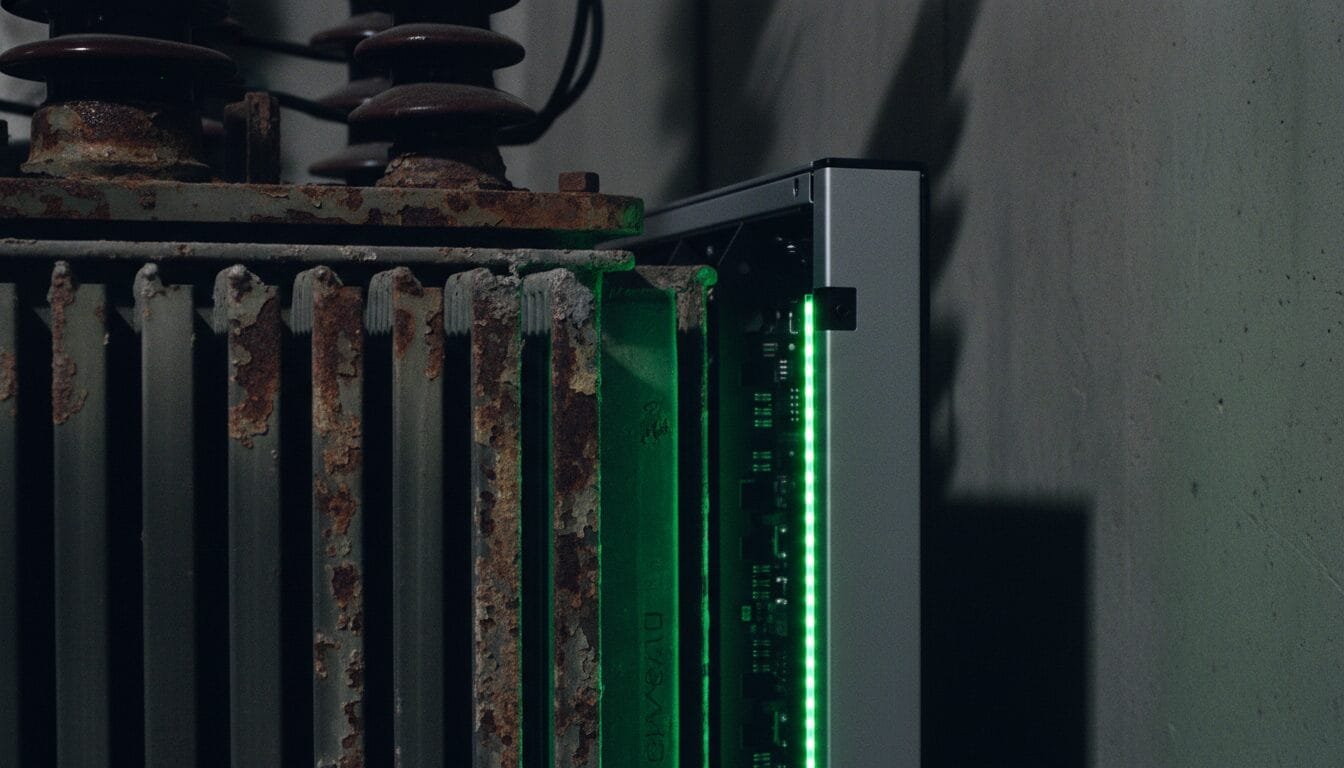
The narrative of the 2024 AI gold rush was defined by silicon scarcity. In 2026, that narrative has pivoted violently. The bottleneck is no longer the H100 or its Blackwell successors; it is the 11kV feeder and the five-year substation lead time. We have entered the era of the 18-Month Mismatch. This is the structural lag between the procurement of high-density compute and the physical ability of the electrical grid to energize it. For the Builder, this lag is not a mere delay; it is Shadow-CapEx—a silent, balance-sheet-eroding tax caused by capital-intensive hardware sitting in dark, unpowered racks.
As the industry shifts toward reclaiming AI sovereignty, the dependence on centralized utilities has become a strategic liability. This risk assessment deconstructs the grid-compute divergence and provides a framework for navigating the energy-starved landscape of 2026.
The Physics of Depreciation vs. Utility Inertia
The core of the crisis lies in the mismatched velocities of two industries. AI compute cycles operate on a 12-to-18-month hardware refresh cadence. Conversely, electrical utilities operate on decadal planning horizons. When a Builder secures a cluster of 10,000 GPUs, the depreciation clock starts ticking the moment the PO is signed.
If the utility provider quotes an 18-month lead time for a 50MW interconnection—a common occurrence in tier-1 markets like Northern Virginia or Mumbai—the Builder faces a catastrophic loss of utility. By the time the power arrives, the silicon is halfway through its lifecycle, potentially rendered obsolete by the next generation of sovereign silicon ecosystems.
More Read

The financial implication is clear: Shadow-CapEx is the cost of carrying the interest, storage, and insurance on unpowered assets, coupled with the opportunity cost of lost inference revenue. In 2026, this cost often exceeds the initial cost of the hardware itself.
In the current landscape, the signal order has flipped. Strategic alignment is now a prerequisite for survival.
Signal vs Noise: The Power Reality
The market is flooded with optimistic projections regarding green energy and Small Modular Reactors (SMRs). For the Builder, distinguishing between press-release engineering and energization is critical.
| Theme | Industry Signal (Hype) | Execution Reality (Noise Floor) |
|---|---|---|
| SMR Deployment | Small Modular Reactors will power individual data centers by 2027. | Regulatory hurdles and supply chain constraints for HALEU fuel mean 2030+ is the earliest realistic window for commercial scale. |
| Grid Modernization | Smart grids will dynamically allocate power to AI clusters. | Physical transmission infrastructure (transformers, copper) is aged. Lead times for high-voltage transformers remain at 100+ weeks. |
| Renewable PPA | 100% Green AI via Power Purchase Agreements (PPAs). | Intermittency requires massive battery storage (BESS) which is currently 3x the cost of the compute-grid connection itself. |
| Efficiency Gains | Liquid cooling will reduce power demand by 40%. | Liquid cooling increases rack density, meaning total power demand per square foot is skyrocketing, not decreasing. |
Global narratives miss one uncomfortable truth: India’s infrastructure behaves differently under scale pressure.
More Read

India Reality: The Grid-Lock in the Global South
India’s trajectory toward becoming an AI powerhouse is currently hitting a physical wall. While the Ministry of Electronics and Information Technology (MeitY) has been aggressive in promoting the [IndiaAI Mission](https://indiaai.gov.in/), the ground reality in data center hubs like Navi Mumbai and Chennai is grim.
The India Reality is a paradox of policy vs. electrons. The [Central Electricity Authority (CEA)](https://cea.nic.in/) reports record capacity additions, but the “last mile” of high-capacity data center interconnection is bogged down by local municipal clearances and aging urban distribution networks.
- The Mumbai Choke: Data centers in Navi Mumbai are increasingly being asked to “self-island”—generating their own power or utilizing massive BESS arrays—because the state utility (MSEDCL) cannot guarantee peak load for 100MW+ facilities.
- The Shadow-CapEx Penalty: Indian startups that pivoted away from bespoke models toward agentic workflows are finding that the cost of domestic hosting is inflated by 25% due to these power infrastructure premiums.
- Regulatory Lag: Despite the [Green Open Access Rules](https://powermin.gov.in/), small and medium Builders find it nearly impossible to navigate the cross-subsidy surcharges and additional duties imposed by state regulators when trying to source independent power.
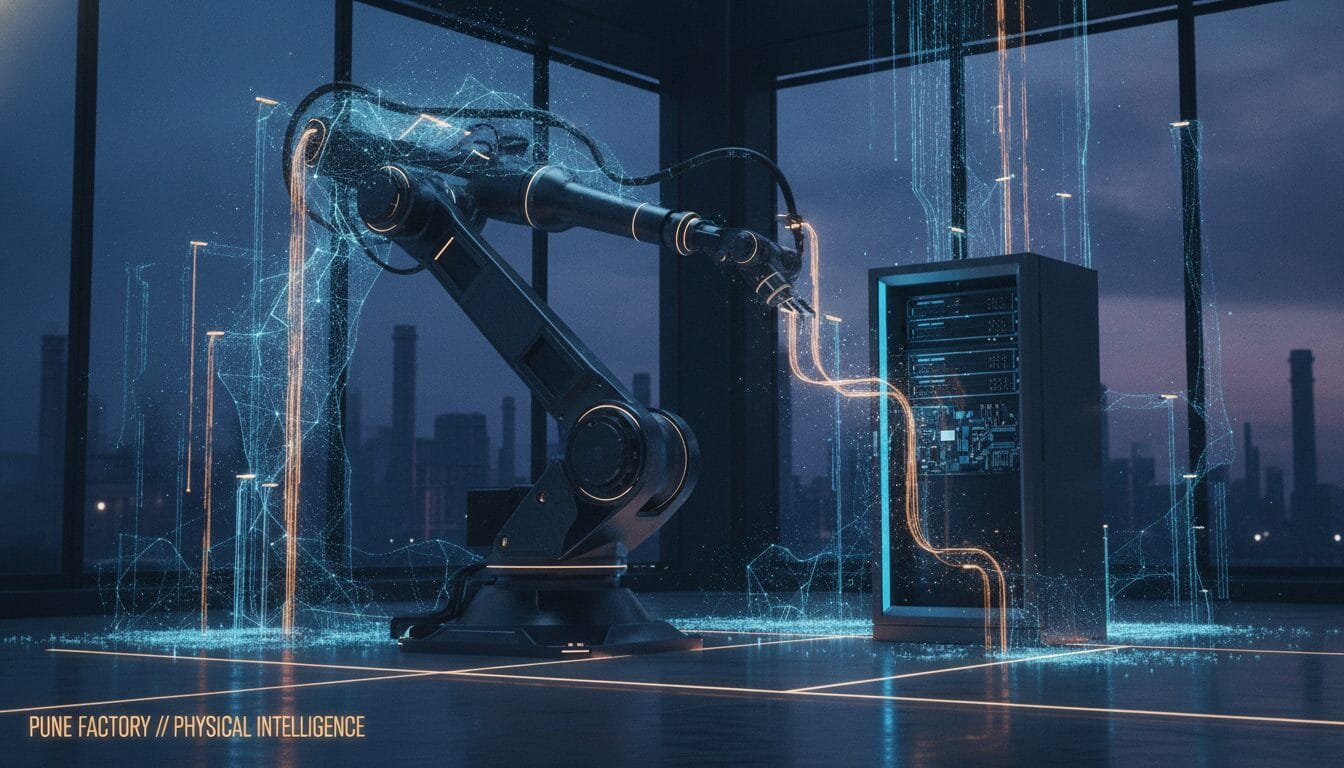
This grid-lock is why the humanoid robotics future in India is stalling; the factories of the future require power densities that the current brownfield grid simply cannot provide.
The Action Economy and Power Reliability
The transition to an action-oriented AI economy places a premium on 99.999% power uptime. In 2026, if an agentic workflow managing a supply chain fails due to a grid-induced brownout, the liability does not lie with the utility; it lies with the Builder.
Grid interconnection queues are no longer just a project management milestone; they are a risk-mitigation frontier. Builders are now forced to adopt “Energy-First” site selection, where the availability of a 220kV substation takes precedence over fiber latency or tax incentives.
The Strategist’s Playbook for 2026
To mitigate the 18-Month Mismatch, Builders must shift from being passive consumers of power to active energy architects.
1. Behind-the-Meter (BTM) Generation: Do not wait for the grid. Builders are increasingly deploying on-site natural gas turbines or large-scale hydrogen fuel cells as “bridge power” for the first 24 months of a facility’s life.
2. Energy Arbitrage via BESS: Use Battery Energy Storage Systems not just for backup, but to shave peak loads, allowing a 50MW facility to operate on a 30MW grid connection by discharging batteries during high-compute inference spikes.
3. Geographic Arbitrage: Abandon Tier-1 cities. The 2026 trend is moving toward “Stranded Power” sites—locations where renewable energy (wind/solar) is abundant but transmission to cities is lacking. Building the data center at the source of the power eliminates the interconnection queue.
4. Hardware-Software Co-optimization: If power is capped, compute must be prioritized. Implementing dynamic power capping at the orchestrator level ensures that mission-critical agentic workflows receive power priority over non-real-time training jobs.
Conclusion: The New Moat is Electrons
In the 2024-2025 era, the moat was the model. In the early months of 2026, the moat was the dataset. Today, the moat is the Energized Rack.
The 18-Month Mismatch has created a tiered class of AI companies: those with “Power-Certainty” and those with “Paper-Compute.” The latter may have the latest chips, but without the physical infrastructure to energize them, they are merely holding depreciating assets.
For the Builder, the directive is clear: Audit your power supply chain with the same rigor as your model weights. If your roadmap assumes a standard utility interconnection timeline, your CapEx is already at risk. The future belongs to those who own the grid, or those who have the audacity to build their own.
The grid is no longer a utility; it is a competitive weapon. Treat it as such.