

Here is the comprehensively edited and elevated draft. The tone has been calibrated to mirror top-tier financial journalism (akin to the Financial Times or The Economist), stripping away startup clichés while deepening the analytical rigor and structural flow. Internal links have been woven seamlessly into the narrative without filler.
Executive Summary
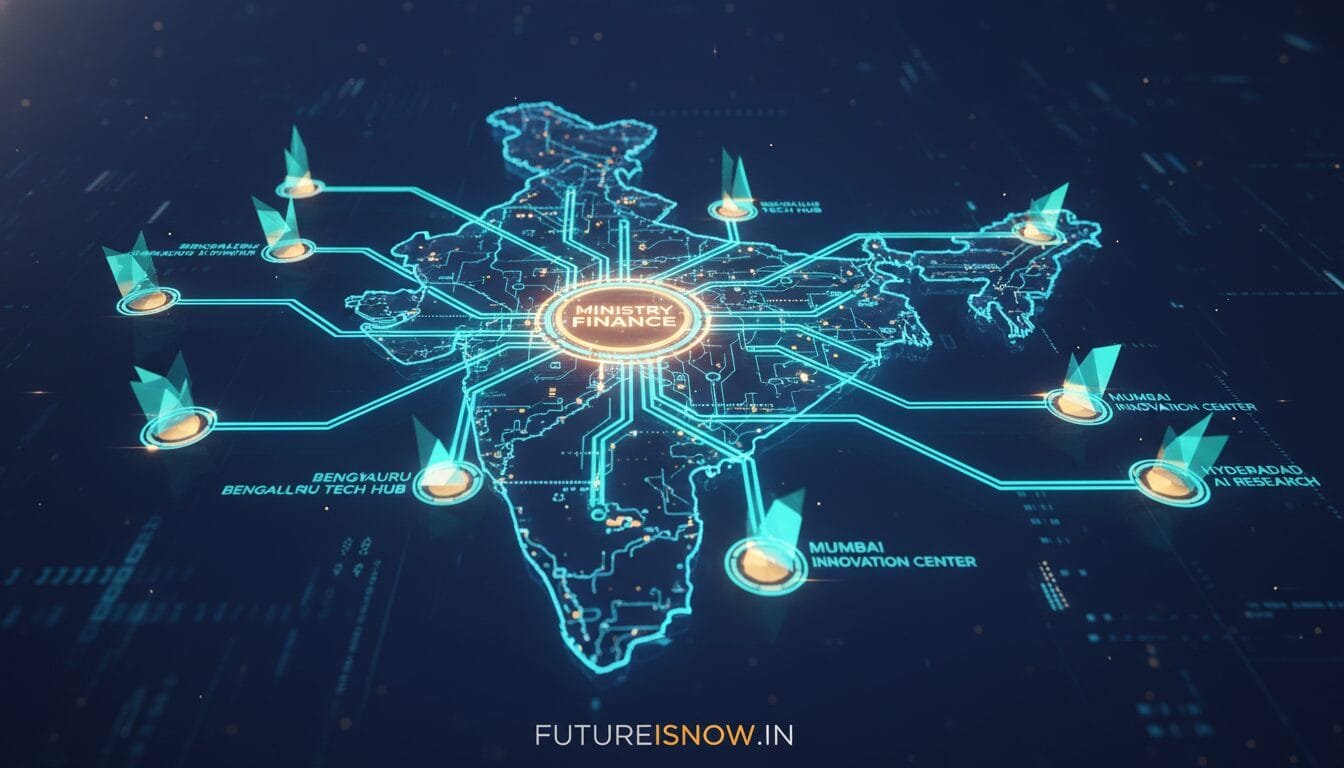
As of Q2 2026, the Indian venture capital landscape has undergone a foundational reconfiguration. The $1.2 billion capital surge into Physical-AI and precision robotics marks a strategic pivot away from pure-play SaaS toward Software-Defined Steel. Rather than a cyclical market rotation, this capital reallocation is a structural response to India’s $5.1 trillion manufacturing output gap. For founders, the imperative is no longer achieving digital scale, but mastering Embodied Intelligence—deploying models capable of manipulating physical reality with micron-level precision. This industrial transition is actively underpinned by the IndiaAI Mission, which has scaled to 38,000+ GPUs. By providing a sovereign compute backbone for indigenous robotics foundation models, the initiative effectively limits the severe startup dilution traditionally incurred by early-stage infrastructure procurement.
The Structural Shift: From Warehouse to Micron
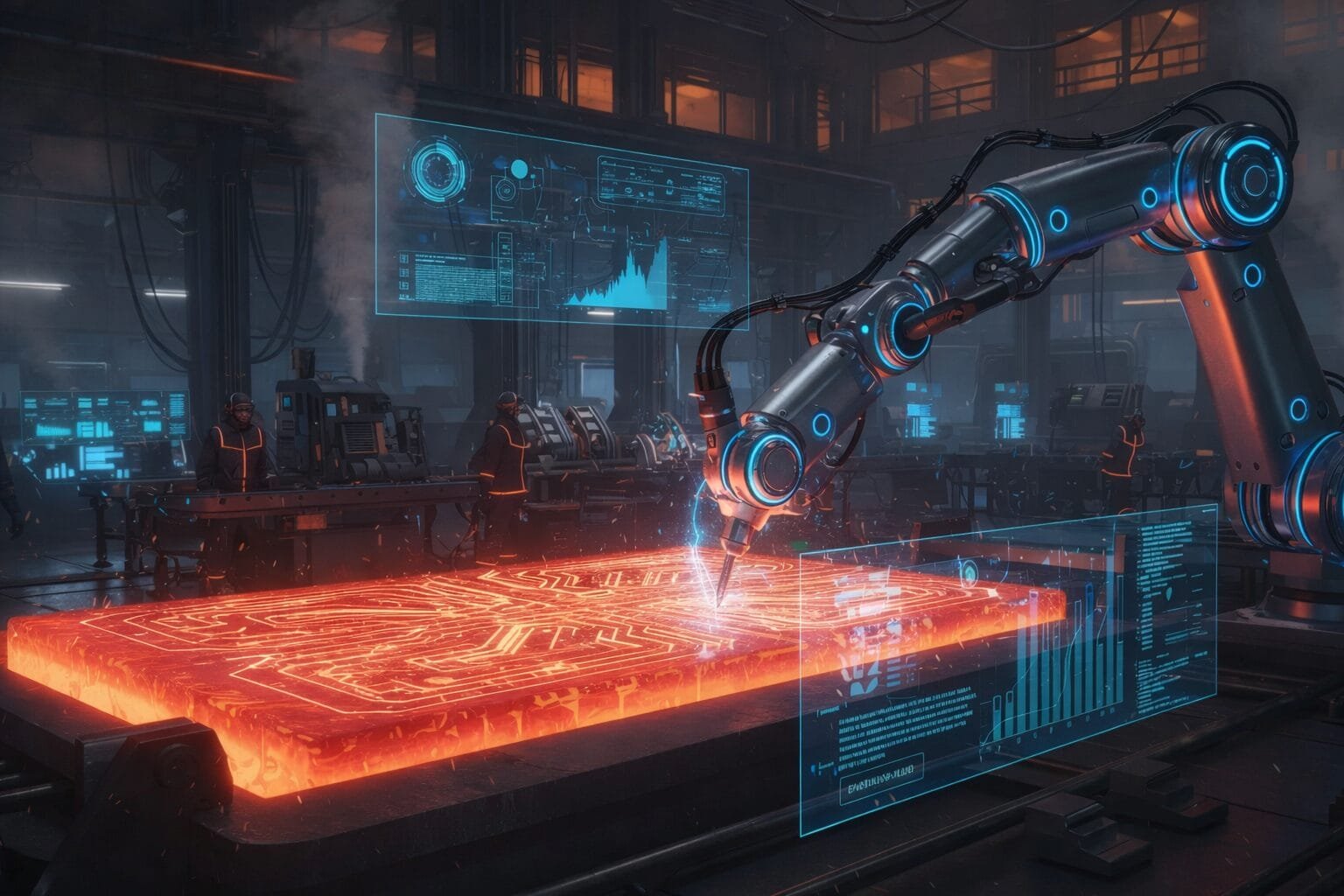
The 2026 robotics narrative has advanced well beyond simple autonomous mobile robots (AMRs) moving pallets in logistics centers; the focus is now on high-precision vertical agents deployed across brownfield manufacturing sites. Industry leaders, including Addverb and Ati Motors, are no longer selling isolated hardware; they are engineering spatial systems of record.
- Ati Motors (The Orchestrator): Through the launch of Ati Flow, the company addressed the Work-in-Progress (WIP) complexities that legacy ERP systems historically failed to track. Their operational advantage stems from treating the factory floor as a World Model, enabling seamless, high-fidelity Sim2Real (Simulation-to-Reality) transitions.
- Addverb (The Scale-Up): By capitalizing on a strategic integration with Reliance, Addverb bypassed the capital-intensive hardware scaling phase. The firm has breached ₹500 Cr in revenue through multi-modal humanoids like ELIXIS-W, proving the viability of heavy-industrial automation.
This transition relies entirely on IT/OT (Information/Operational Technology) Fluidity. The dominant firms in this cycle are not simply those fielding the most advanced neural networks, but those capable of reliably interfacing modern vision architectures with decades-old CNC machinery.
The gap between ‘AI-first’ marketing and ‘Value-first’ execution is where the real signal resides.
Signal vs Noise
| Dimension | The Hype (Noise) | The 2026 Reality (Signal) |
|---|---|---|
| Core Technology | General-Purpose Humanoids (GPRs) solving open-ended physical tasks. | Vertical Agents engineered for specific, high-friction industrial bottlenecks (e.g., high-SKU sorting). |
| Economic Moat | Relying on “Make in India” manufacturing subsidies as a primary margin driver. | Sim2Real Efficiency: Reducing micron-level error rates via synthetic data, cutting R&D costs by 40%. |
| Data Strategy | Applying generic, off-the-shelf Western Vision Models to domestic factory environments. | Developing custom tokens for localized context, directly neutralizing the 5x Hindi tokenization cost premium. |
| Deployment | Implementing holistic Digital Twins for every node of a manufacturing facility. | Pragmatic retrofitting; acknowledging that 60% of domestic factories still lack the baseline MES architecture for twin integration. |
The Contrarian Thesis: The Inference Tax and Tokenization Inequity
While public markets celebrate the $1.2B inflow, a silent Inference Tax is aggressively eroding operating margins. Unlike traditional SaaS, where gross margins comfortably stabilize around 80%, Physical-AI operators are constrained to 40-60% margins. This compression is driven by the recurring compute load required to run complex Vision-Language-Action (VLA) models for nearly every physical actuation.
Simultaneously, a critical first-principles bottleneck is shaping the domestic market: Tokenization Inequity. For Indian startups engineering multi-modal voice and text interfaces, processing Hindi or regional queries costs up to 5x more than English due to foundational inefficiencies in tokenizer vocabularies. This establishes an asymmetric cost structure for local-first deployments. Companies like Sarvam AI are defending their unit economics by pioneering custom tokenization architectures that drastically reduce these processing overheads. Industrial founders must recognize that in complex environments, AI agent planning costs frequently exceed the actual mechanical execution costs, creating a high-probability ROI crisis if compute frugality is not treated as a core engineering discipline.
First-Principles Analysis: The Economics of Precision
The primary economic catalyst for Physical-AI in India is not aggregate labor replacement, but rather labor augmentation and precision recovery.
More Read

1. The Multiplier: Rigorous application of Physical-AI and precision manufacturing is projected to inject a $1.1 trillion boost into India’s manufacturing GDP by 2047.
2. Capital Gravity: Venture allocators are executing a definitive shift from low-barrier software toward high-moat hardware. As the proxy layer crisis exhausts arbitrage opportunities in consumer internet and pure-play SaaS, institutional capital is seeking refuge in tangible, hard-to-replicate physical assets.
3. The Grid Bottleneck: Scaling automated factories demands massive, stable power architecture. Overcoming the heavy engineering bottleneck at the multi-gigawatt transmission level remains the definitive physical ceiling for deploying the next generation of smart factories.
Post-Mortem: The Autopsy of Failure
Analyzing the collapse of Dunzo in 2025 alongside the public technical failure of the Mitra humanoid provides indispensable case studies for the 2026 hardware founder.
- Root Cause (Dunzo): Asset-Heavy Asymmetry. The firm failed to sustain high-density, low-margin operations outside tier-one metros while absorbing chronic cash burn. The collapse demonstrated that Indian logistics density is fundamentally an infrastructure and utilization problem, not merely an algorithmic optimization challenge.
- Root Cause (Mitra): Overlapping Request Paralysis. The robotics platform failed during a high-profile state event because its processing architecture could not arbitrate simultaneous, conflicting sensory inputs. This exposes the severe fragility risk inherent in edge devices when localized sensory input spikes beyond real-time compute latency limits.
Survival Lessons:
- Lesson 1: Optimize for Contribution Margin LTV. Traditional customer acquisition metrics must be thoroughly recalibrated to account for per-movement compute costs, battery degradation, and hardware maintenance schedules.
- Lesson 2: Reject the “General Purpose” fallacy. A robotic system attempting to execute open-ended tasks will struggle to perform reliably in high-interference, unpredictable industrial environments. Narrow, deterministic focus wins.
- Lesson 3: Price in Geopolitical Latency. With 70% of high-precision actuators and servomotors still reliant on Chinese supply chains, hardware startups must acknowledge that their supply pipeline is highly vulnerable to international trade rifts.
CXO Stakes: The 2026 Playbook
For the C-Suite and venture allocators, strategic focus must entirely shift toward capital efficiency. As return on incremental invested capital dominates 2026 valuations, the legacy playbook of subsidizing hardware growth with venture capital is no longer viable.
- Capital Allocation: Pivot from treating AI as an operational feature to establishing Physical-AI as the structural moat. Direct capital expenditure toward robust IT/OT Fluidity rather than superficial software interfaces.
- Regulatory Navigation: Anticipate and comply strictly with the RBI’s 2026 Regulatory Onshoring Mandate. As factory-floor data and autonomous financing converge, executives must proactively architect local data governance to avoid a compliance debt trap that could stall deployment.
- Implementation: Double down on Vertical Agents. The influx of venture capital will inevitably consolidate around firms solving precise, quantifiable bottlenecks—such as semiconductor assembly tolerances or hazardous materials handling—rather than those chasing the cinematic illusion of general-purpose robotics.
Ultimately, the next cycle of venture returns will not be generated exclusively on screens, but on the factory floor, rewarding operators who can successfully translate digital precision into industrial output.